
Willamette River Bass Fishing: The Smallmouth and Largemouth Guide Nobody Has Written Yet
Willamette River bass fishing is one of the most underrated fishing opportunities in Oregon. If you Google “Oregon…
Articles
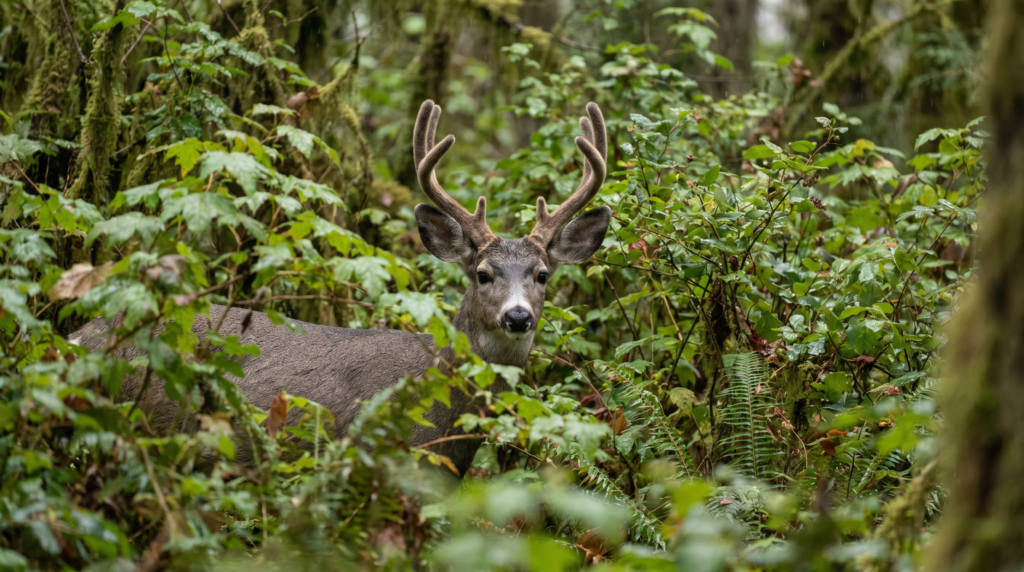
If you’ve spent more than one season chasing Columbia blacktail deer in Oregon, you already know the nickname “grey ghost” isn’t just some marketing fluff some outdoor writer dreamed up over a third cup of coffee. These deer earn it. You can glass a clearcut for two hours, see nothing, scratch your butt, stand up to stretch… and that’s exactly when a buck you swear wasn’t there a second ago melts into the brush forty yards away. Folks, that’s a blacktail. The short answer to “where do I find them” is: thick cover near food, on public land most people drive right past. The long answer is the rest of this article, so grab your coffee and let’s get into it.
Blacktail deer aren’t whitetail with a costume change. They’re smaller, they live in some of the gnarliest cover the Pacific Northwest has to offer, and they are absolute professionals at not being seen. Compare that to whitetail, which have about a thousand research studies and forty years of QDMA data behind them, blacktail get a fraction of that attention. Less research means less “here’s exactly what to do” advice floating around, which honestly, I kind of love. It means there’s still some mystery left in hunting them, even if that mystery occasionally translates to “we drove home with tag soup again.”
The grey ghost reputation comes down to habitat. Blacktail live in the thick stuff reprod, brush, timber edges, and they don’t need to run far to disappear. One step into a wall of vine maple and they’re gone. So the name of the game isn’t “find deer in the open and make a long shot.” It’s “figure out where they’re bedding and feeding, and get close before they know you exist.”
If you want one piece of advice and nothing else, it’s this: learn to read a clearcut. The Oregon Coast Range is covered in them thanks to the timber industry, and clearcuts in that 3-to-8-year-old range (post logging, brush coming back in but not a jungle yet) are blacktail buffets. New growth, browse, and edge cover all in one place.
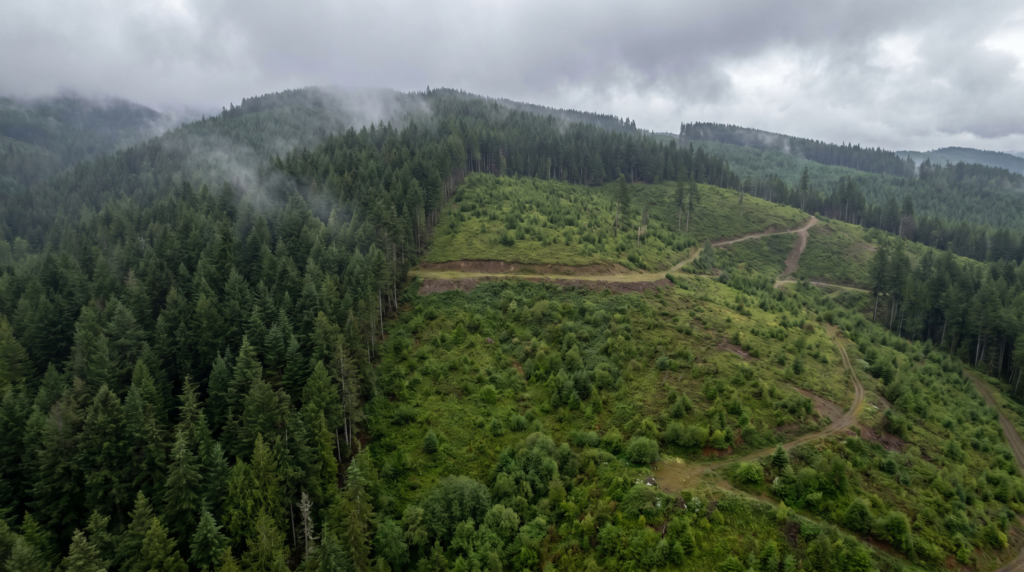
Here’s how I break it down when I’m glassing:
And yes, I will absolutely sit there glassing a hillside for two hours, see nothing, and then watch a buck stand up from a literal pile of slash that I had been staring directly at the whole time. It’s not rocket science, it’s patience and sitting, but my knees would like the record to show that “sitting” still hurts when you’re built like I am.
Head over toward the Cascade foothills and the game is similar but the terrain gets steeper, which, in full disclosure, is not this large human’s favorite. “It’s not a good walk for a fat guy” isn’t just a bit, it’s a documented fact from multiple hikes where I was breathing like I’d run a marathon after climbing about 200 vertical feet.
In the foothills, glass early and late, focus on south-facing slopes in early season (more browse, deer like the sun) and shift to thicker, north-facing timber as it warms up or as hunting pressure increases. Saddles and benches are still your friends here too, and anywhere a deer can move between feeding and bedding without crossing open ground.
I will die on this hill: e-scouting is the single most underrated tool for blacktail hunters, and OnX Maps plus Google Earth is how you find spots before you ever burn a tank of gas. We go deeper on this exact workflow in our eScouting episode, same tools, different species. Here’s what I’m looking for on the map before I ever lace up boots:
The payoff here is huge. Instead of driving roads hoping to get lucky (guilty, your honor, I have done this), you show up with two or three real spots already picked out. Doesn’t guarantee you’ll see a deer, nothing does, that’s the blacktail tax, but it stacks the odds in your favor instead of against it.
Blacktail have noses like they’re getting paid for it, and a blown spot can stay blown for the rest of the season. So a few things I take dead seriously even when everything else about the day is a comedy of errors:
And on the ethics side, this is the one place I get genuinely serious instead of cracking jokes, make the shot count. Know your max range, know your rifle, and if it’s not a shot you’d take on a calm range day, it’s not a shot to take on a deer. A clean miss is fine, that’s just Tuesday. Wounding an animal and not recovering it is the actual failure, and it’s on you to do everything you can to find it if it happens.
You do not need to mortgage the truck to hunt blacktail. Gucci gear is not going to harvest you: Walmart camo will hide you from a deer about as well as the $400 stuff will, because blacktail care way more about your scent and movement than your pattern. That said, there are a few places I won’t cheap out:
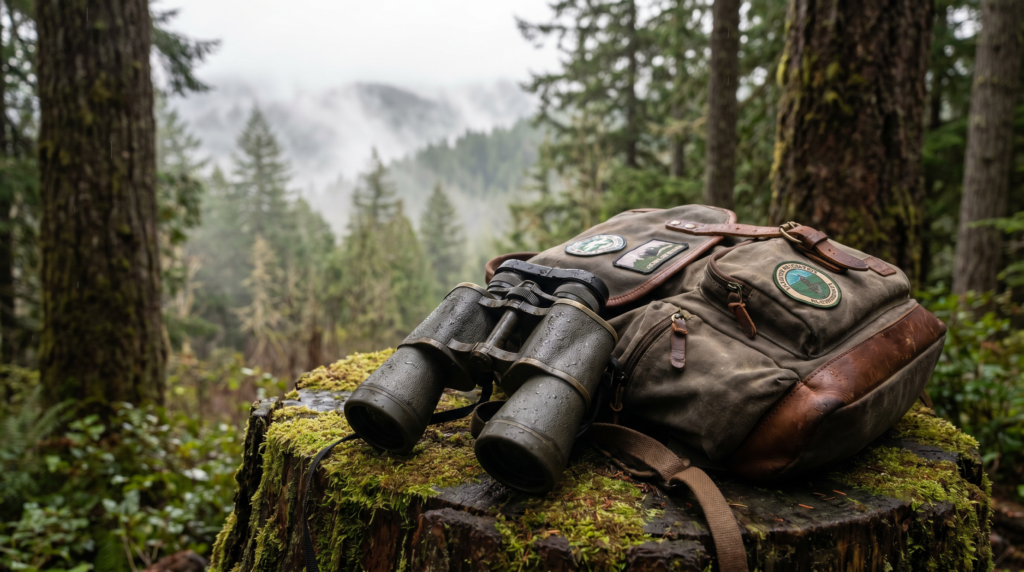
Everything else clothing, calls, the rest, budget gear works fine for 90% of hunters. Spend the savings on coffee.
We cover preseason scouting in more depth in our blacktail preseason episode. Last fall I had a spot picked out from e-scouting that looked perfect on the map clearcut, bench, edge cover, the whole package. Got there before light, hiked in (slowly, because see above), set up to glass… and spent the next three hours watching absolutely nothing happen except my own breathing fogging up my binos. Packed up, started the walk back, and a buck stood up out of a brush pile about fifteen yards from where I’d been sitting the entire time. Should’ve, would’ve, could’ve. That’s blacktail hunting in a nutshell, and honestly? Still a good day. We didn’t fill a tag, but we got out, the legs got some exercise (unfortunately), and I’ve got a story for the next podcast. That’s a win in my book.
Focus on BLM, state forest, and timber company land with clearcuts in the 3-8 year regrowth range. Use OnX Maps and Google Earth’s historical imagery to identify cuts at the right stage, and check current ODFW big game hunting regulations to confirm public access before you go.
Early morning and late evening, when deer are moving between bedding and feeding areas. Midday can still produce in thick, shaded cover, especially during warm weather.
No. Budget camo and clothing work fine, blacktail respond far more to scent and movement than to pattern. Spend your money on optics, boots, and a pack that can carry meat out.
Because of their gray coats and their uncanny ability to vanish into thick cover at close range, often without you ever seeing them move.
Driving roads and hoping to spot a deer in the open, instead of e-scouting clearcuts and bedding-to-feeding terrain ahead of time and getting into position on foot.
Don’t chase immediately. Give it time, then track carefully and methodically. Recovering a wounded animal is the priority, a clean miss is part of the game, but an unrecovered wounded animal is the real failure.
Blacktail hunting in Oregon isn’t about finding a magic spot, it’s about reading the terrain, putting in the e-scouting work, and being willing to sit still longer than feels reasonable (especially if you’re built like me). Some days you’ll see ghosts everywhere. Some days you’ll see absolutely nothing and call it “scouting.” Either way, get out, put in the time, and we’ll see you in the next one. And hey if you do get skunked, at least it’s a good excuse for more coffee.
More From the Blog
Willamette River bass fishing is one of the most underrated fishing opportunities in Oregon. If you Google “Oregon…
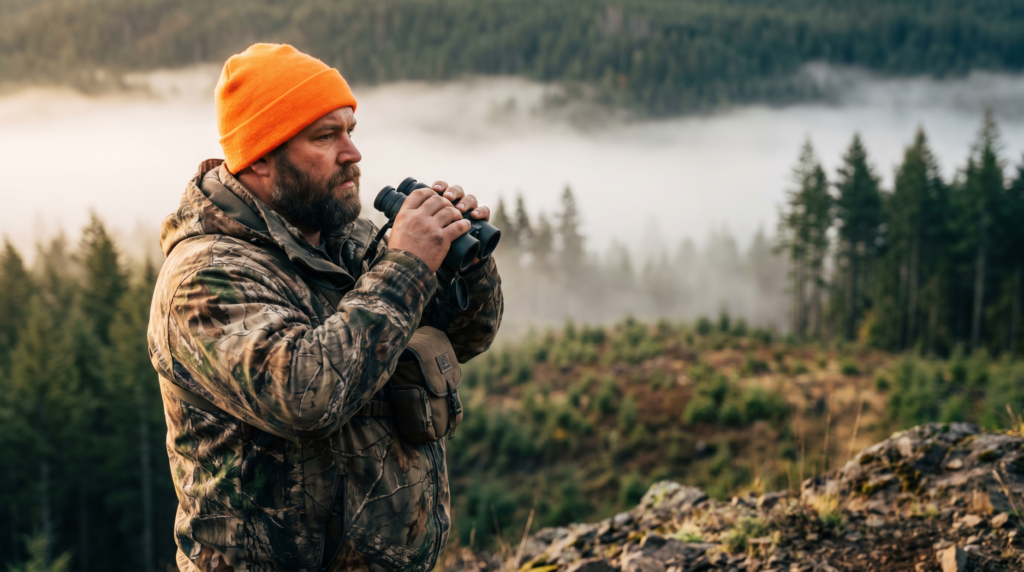
E-scouting for hunters and anglers is the skill most people skip and then wonder why they keep coming…
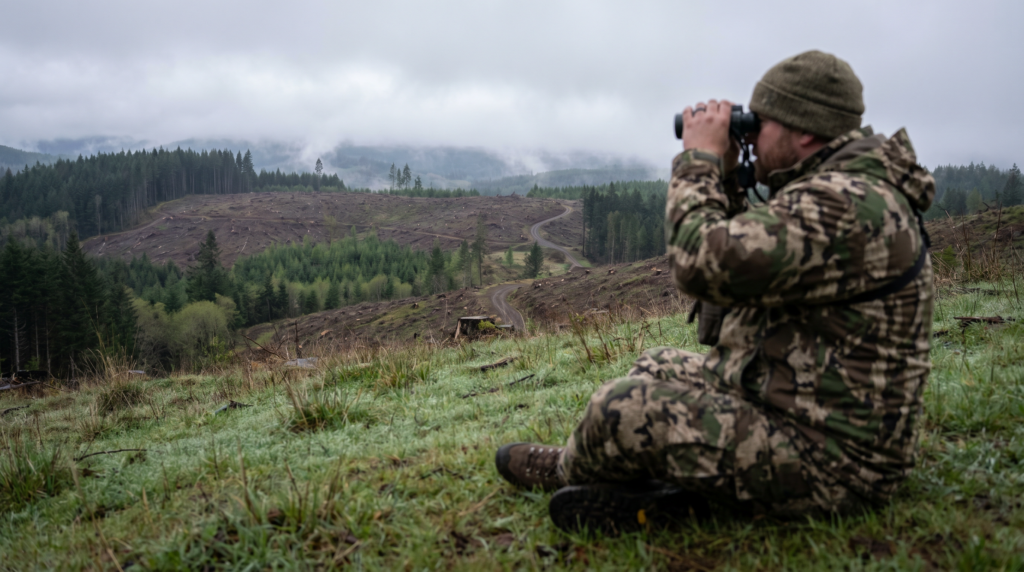
Most hunters glance at a clearcut and drive on. Here's how to actually break one down: the six…