
Willamette River Bass Fishing: The Smallmouth and Largemouth Guide Nobody Has Written Yet
Willamette River bass fishing is one of the most underrated fishing opportunities in Oregon. If you Google “Oregon…
Articles
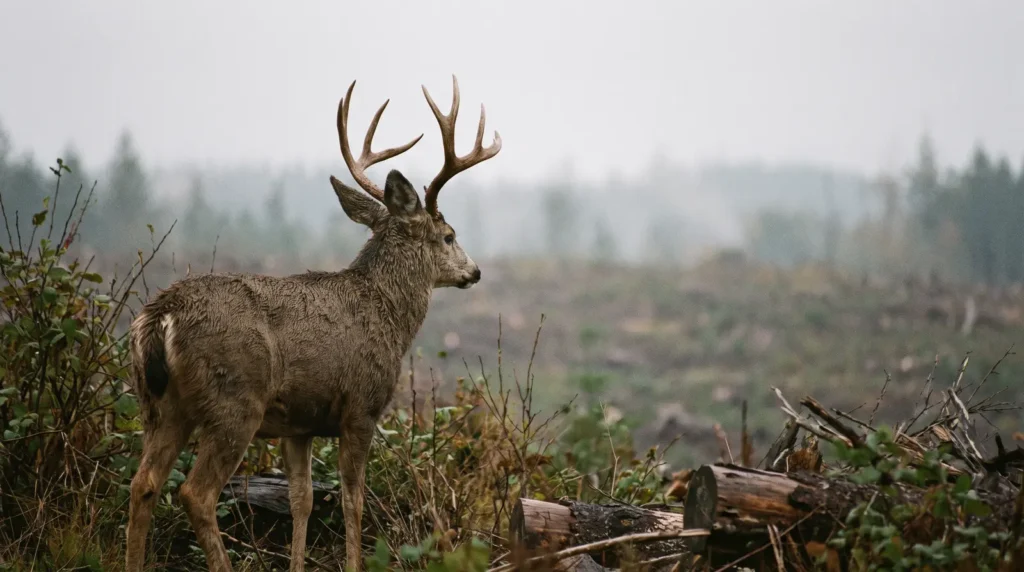
If you want to consistently find blacktail deer on the Oregon Coast Range, learn to break down a clearcut. Identify the transition zones, benches, ravines, and bedding cover inside it. Glass it with a plan instead of just staring at a green hillside hoping a deer waves at you. That’s the short version. The long version is the actual skill most hunters skip. Spending two hours behind glass sounds boring, until it’s the difference between tag soup and a truck full of meat. Grab a coffee and let’s break one down together.
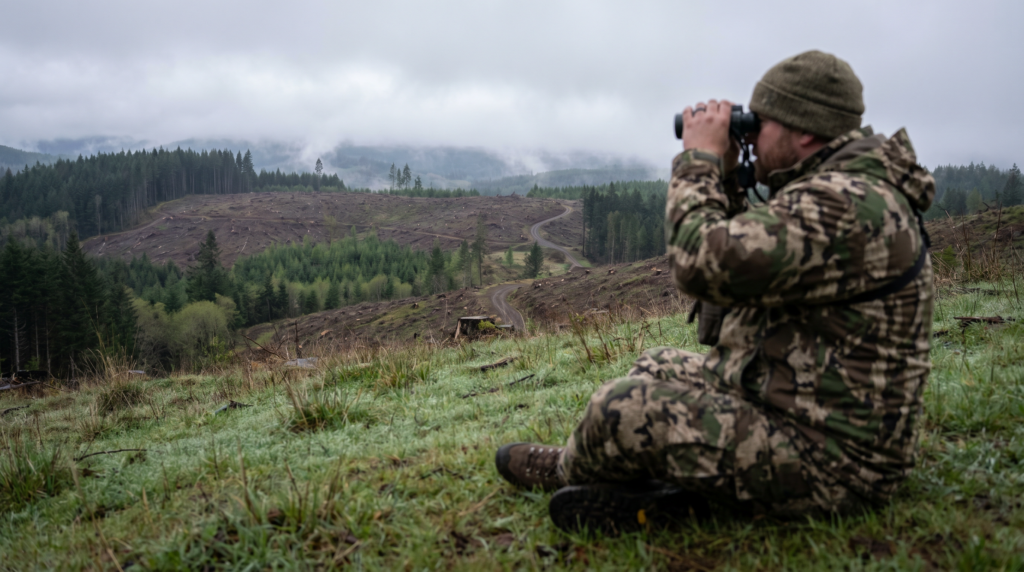
Here’s the uncomfortable truth, most guys driving the Coast Range aren’t actually hunting, they’re road hunting and hoping. They roll up, glance at a clearcut for ninety seconds, see nothing, and drive to the next one. Folks, that’s not scouting, that’s a very slow way to burn gas.
Deer don’t show up on command. A clearcut that looks empty at 7:15 can have three deer feeding out of the timber at 7:45. A hunter who only gave it ninety seconds will swear there’s nothing in there. He’ll tell his buddies the same thing. That bad information gets repeated for years. Spots get written off as dead because nobody ever actually broke them down properly in the first place.
The hunters who consistently find blacktail aren’t smarter or luckier. They just spend more time behind their binoculars, actually breaking the terrain down piece by piece instead of glancing and bailing. That’s it. That’s the whole secret. It’s somehow still a secret to half the people hunting this range, which honestly works out fine for the other half of us.
This is the mistake that wastes the most time. Most guys put glass up, sweep the whole hillside like a security camera, see nothing move, and call it glassed. A clearcut isn’t one thing to look at. It’s six or seven specific spots stacked inside a bigger picture. Each one needs its own few minutes of dedicated attention before you move to the next. Below is the actual order I work a cut in, not just “look at all of it.”
Deer don’t walk into the middle of a clearcut and stand there like it’s a photo shoot. They stage just inside the tree line, in the shadow. They hold half a body width back from the edge. The light’s dimmer there, and their outline breaks up against standing trunks.
They’ll wait there a few minutes and watch the open ground. Only then do they feed outward, a few steps at a time, ready to slip back in if anything feels off. Glass that dark band first, not the bright open ground past it, and do it slow. This band runs maybe ten to twenty yards deep, the single most overlooked strip of real estate on the whole hillside.
This one’s underrated, and it’s not just theory, it’s pattern. We’ve seen more deer crossing sweeping turns where a ravine cuts the road. More than standing in the open middle of a clearcut.
Here’s why: the ravine drops below the road grade and curves with it. A deer walking up that draw is blind to anything on the road until the exact moment it steps into the bend. So they cross there confidently, often at a walk instead of a nervous trot. If a logging road bends around a draw near your cut, glass that bend on its own. It’s basically a crossing zone hiding in plain sight.
A finger ridge is a narrow point of timber or reprod sticking out into the open cut. Think of it like a peninsula into a lake. Deer use these to feed into the open without fully committing to it. They can duck back into cover in three steps instead of fifty.
Same goes for isolated clumps of brush, a lone stand of timber, or leftover slash that never got cleared. These islands get glassed last by most hunters because they look insignificant from a distance. Deer visit them first, because they’re a built-in escape hatch. Treat any island like its own miniature timber edge and glass its shaded side.
Logging slash and big stumps throw shade and break up a deer’s outline better than you’d think. This is especially true in morning or evening light. A deer can stand here in plain sight, completely still, and you’ll glass right past it. Your brain is pattern-matching for a whole deer shape, not a weird dark lump by a stump.
Slow down and look for parts, not a whole animal. An ear flick. A horizontal line where everything else is vertical. A patch of grey-brown a shade off from the bark around it. Give each stump field or slash pile thirty seconds to a minute of focused glassing instead of sliding past it.
Benches are flatter shelves partway up the slope. A deer can stand there, feed, and still see what’s coming from below. That makes them comfortable daytime hangout spots, not just travel routes. Saddles are the low dips between two high points, connecting one patch of timber to another.
Deer cross through saddles constantly. It’s the path of least elevation gain, same as you’d rather walk through a gap than over a hill. A bowl-shaped clearcut is a gift here. The whole inside is in view from one spot. There’s usually a bench or two stacked along the sides, with a ravine cutting the bottom. Work the benches first, then run your eyes along the saddle edges.
A darker, recently cut section inside an older clearcut usually means one thing. So does a patch noticeably greener than the surrounding grass. Better minerals, or more tender browse than the duller growth around it.
Deer are picky eaters when they have options. They’ll walk past acres of mediocre brush to get to the good stuff. If part of a clearcut greened up earlier or fuller than the rest, that’s not just a pretty patch, that’s a dinner table, and it deserves a longer look.
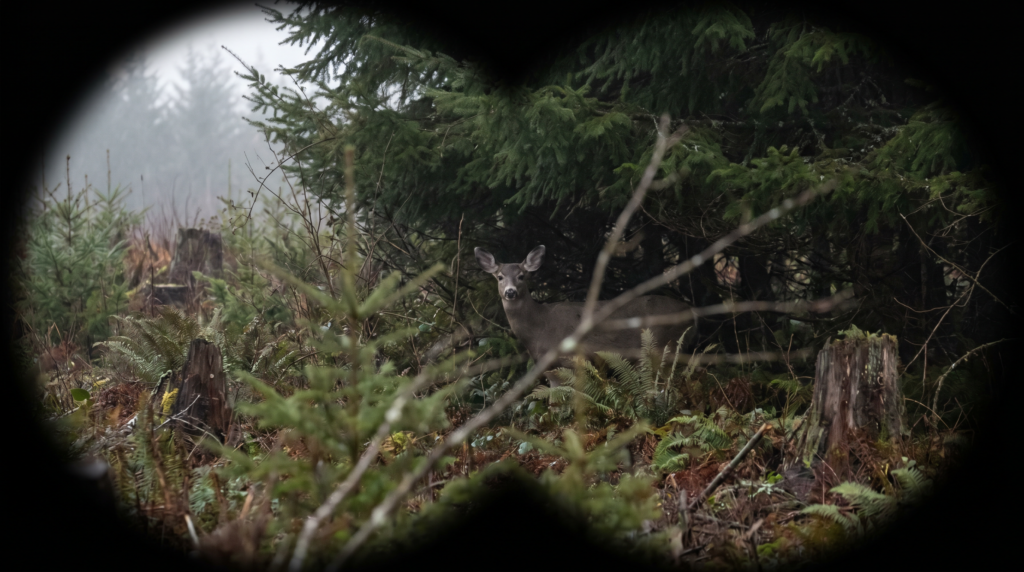
Work it like a grid, not a sweep. Pick one of the six spots above, glass it slow for a solid minute or two, then move to the next. Don’t let your eyes drift across the whole hillside in one pass and call that “checked.” Glass the shaded edges and timber pockets first. Do this in the morning and evening. That’s where deer are still moving and feeding in low light. Shift toward sunny, south-facing benches as the morning warms up. That’s when deer tuck into comfortable spots to bed.
And train yourself to look for pieces of a deer, not a whole deer. An ear. A leg. A patch of color that’s the wrong shape for a stump. Ninety percent of the blacktail you glass up are partially hidden the entire time you’re looking. The hunters who find deer consistently have trained their eyes to flag “that doesn’t belong.” They don’t wait for a full broadside silhouette.
Once you’ve worked through where they’re feeding and traveling, figure out where they’d actually bed. Bedding is where deer spend the bulk of daylight hours, not the brief windows they spend crossing a ravine or feeding a green-up patch. Thick reprod on the lee side of the wind, anywhere out of sight from the road, tucked just inside that timber edge, that’s bedding. They can see the open ground from there without being seen. Deer like a bedding spot with their back to thick cover and a clear sightline or windline out front. Look for thick stuff backed up against an even thicker wall of timber, not just thick stuff in general.
The nastiest, brushiest, “I really don’t want to crawl through that” pockets are often exactly where the pressure-shy deer go to retire. That’s true for the whole day. This is especially true once the season opens. The easy, pretty cover starts getting walked through by every hunter on the mountain. According to the Oregon Department of Fish and Wildlife, blacktail in pressured units shift hard toward this kind of low-visibility cover. That shift happens once rifle season opens, and it lines up with everything we see on the mountain. If it looks miserable to walk through, that’s usually a good sign, not a bad one. It’s worth a long look through the glass, even if you never plan to walk into it. A lot of the bedding cover that matters most isn’t something you’ll ever set foot in. It’s something you glass from a distance and leave alone. The second you walk through it, you’ve burned the spot for the rest of the season.
You can usually break down a clearcut from two angles. It’s worth scouting both before you commit to one for opening morning. The first is sitting across from it, on an opposing hillside or pulled back from the edge of the cut itself. There you get the whole sidehill in view at once and can work all six focal points without moving. The second is working a cat road around to a knob or perch on the opposite side. That usually means a longer walk, sometimes close to half a mile or more. But it can put you up into a draw or a back bowl you’d never see from the valley floor or the main road.
Each angle shows you something the other one hides. The straight-on view across a draw is great for picking apart benches, saddles, and the overall shape of the cut. But it can leave a back corner or a fold in the terrain completely blind. The knob or perch angle solves that blind spot, but usually costs you the wide, comfortable view of the whole hillside. If you’ve got the time, walk both before the season opens. Then you know which one actually shows you the deer and which one just feels like a good spot from the truck. This is the same scouting legwork we talk about in our mid-summer prep rundown. The work you do months before opening day is what actually pays off in October.
Wherever you sit, don’t perch right on the open road silhouetted like you’re trying to get shot at. Push back a little. Use the timber or a rise behind you to break up your outline. Let the terrain hide you the way it hides the deer. A few yards of repositioning can be the difference between deer feeding calmly within range and deer that bolt. The second they crest a rise and see your shape against the sky, they’re gone. And bring a real pair of binos, Athlon Argos range or similar. Glassing for two hours through $18 Amazon binoculars is a great way to get a headache and miss a deer standing in plain sight. Cheap glass blurs out exactly the kind of subtle edges and color differences you’re trying to train your eyes to catch.
Freshly logged ground gives deer access to minerals they don’t get from standing timber. A darker patch of recently disturbed dirt inside an older clearcut is worth a second look for that reason alone. That’s true separate from whatever’s growing on it. Water at the bottom of a cut pulls deer in hard during the dry months. Even a small seep, a cut line, or a barely-there trickle counts. This matters most on the Coast Range. A lot of the smaller drainages run thin by late summer and early fall there.
Big timber for cover. The six focal points above for feed and travel. Fresh dirt for minerals. Water nearby. When a single clearcut has all of that stacked together, you’ve found one of those spots worth coming back to again and again, season after season. That’s true whether you tag out there the first time you sit on it or not.
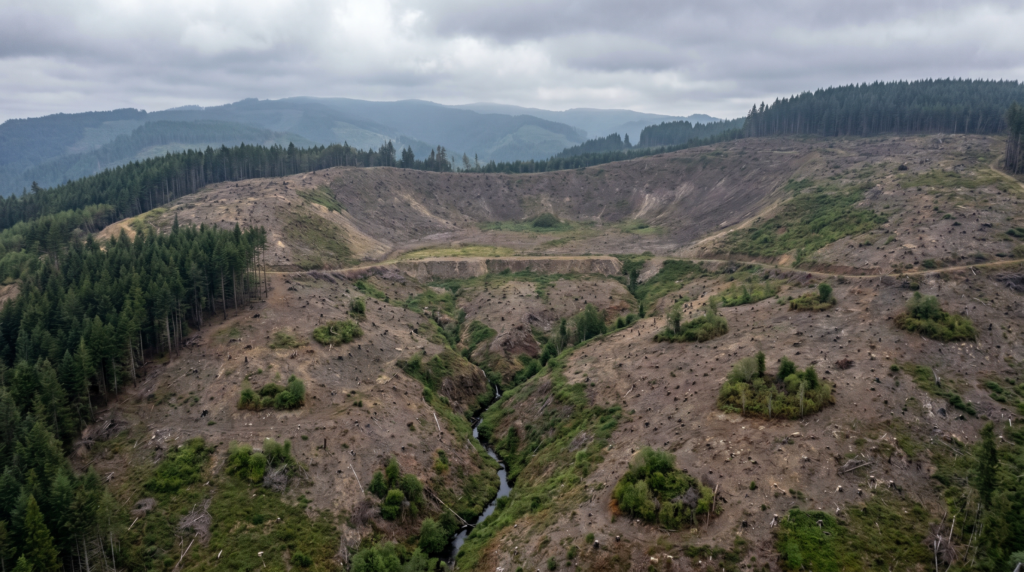
You will glass a hillside for two hours, see nothing, and stand up to stretch. Then you’ll watch a buck materialize out of a brush pile you’d been staring directly at the entire time. It’ll be fully visible, like it had been waiting for you to give up. This is not a glitch in the system, this is the system. Blacktail are absolute professionals at not being seen. The only counter to that is more time behind the glass than feels reasonable. Work through those six focal points over and over, instead of one quick scan and a walk back to the truck.
[stage direction: this large human sitting cross-legged on a hillside for two hours] My knees would like the record to show that this part of the job is not free. There’s a very specific kind of pain that comes from sitting on uneven ground for two hours when you’re built like I am. It doesn’t go away just because you finally saw a deer. But it works. It works a lot more often than driving roads hoping for a miracle ever will. I’ll take sore knees and a deer in the spotting scope over a smooth drive and an empty notebook any day.
Some of the best clearcuts I’ve found weren’t on a main road at all. They were tucked behind private property with a little walk required to get onto public ground. Or they were buried far enough down a spur road that most guys see it on the map and decide it’s too far. Most of this country is managed by the BLM or state and timber-company land that allows public access. You just have to be willing to check the boundaries and walk a little farther than the next guy. If access is even slightly prohibitive, that’s usually a sign there’s less pressure and more deer. Most hunters will choose convenience over quality nine times out of ten. The tenth guy is the one filling his tag.
Always confirm boundaries and get permission where needed. Never cross a gate or a fence that isn’t yours to cross, no matter how good the clearcut looks on the other side of it. Respect the line, every time. It’s not worth the relationship with a landowner or a logging company. There’s almost always another clearcut just as good somewhere that doesn’t require you to be a jerk about it. We get into the regulation side of public-land access in our Travel Management Rules breakdown if you want the full picture.
Found a clearcut last spring that looked perfect from the road, the kind of spot you e-scout for a week and finally go check in person. Hiked up, sat down to glass, and within two minutes watched three deer bolt out of the reprod we’d apparently walked right past. Spent the next hour breaking down the rest of the cut anyway, found a bench and a ravine worth remembering, and walked out without a single good look at a deer we actually planned to see. Should’ve, would’ve, could’ve. Still logged it as a win, because now I know exactly where to sit next time, and that’s half the battle in this game.
It means systematically glassing a clearcut piece by piece, identifying transition zones, benches, ravines, bedding cover, and water, instead of just scanning it once and moving on. It’s the difference between scouting and driving past.
At least an hour, ideally closer to two, especially during prime morning and evening movement windows. Blacktail can stay hidden for long stretches before they show themselves.
Cuts in the 3-to-8-year range, where new growth and browse have come back in but it isn’t a wall of brush yet, tend to hold the most deer.
The dark band just inside the timber edge, not the open ground past it. Deer stage there before feeding out, and most hunters glass right past it because their eyes go straight to the bright open part of the cut.
Ravines and draws that the road cuts through hide a deer’s approach right up until the bend, so they feel safer crossing there than in open sight lines. Glass any sweeping turn near a draw the same way you’d glass a bench or saddle.
An ear flick, a leg, a horizontal line, or a patch of grey-brown that doesn’t match the surrounding brush or stumps. Most blacktail you glass up are partially hidden, so train your eyes to flag anything that looks “off” instead of waiting for a full silhouette.
No, but don’t go rock-bottom either. A mid-range pair like the Athlon Argos line will save your eyes during long glassing sessions far better than budget department-store optics.
Breaking down a clearcut isn’t complicated, it’s just patient. Find the edges, find the benches and ravines, figure out where they’d bed, and then do the hardest part: sit still and actually look longer than feels reasonable. Some days you’ll see ghosts everywhere. Some days you’ll see nothing and call it scouting. Either way, get out, put in the glass time, and we’ll see you in the next one. And if you get skunked anyway, well, that’s just more excuse for coffee.
More From the Blog
Willamette River bass fishing is one of the most underrated fishing opportunities in Oregon. If you Google “Oregon…
Our real October plan to put a Coast Range blacktail on the ground: where to find deer, how…
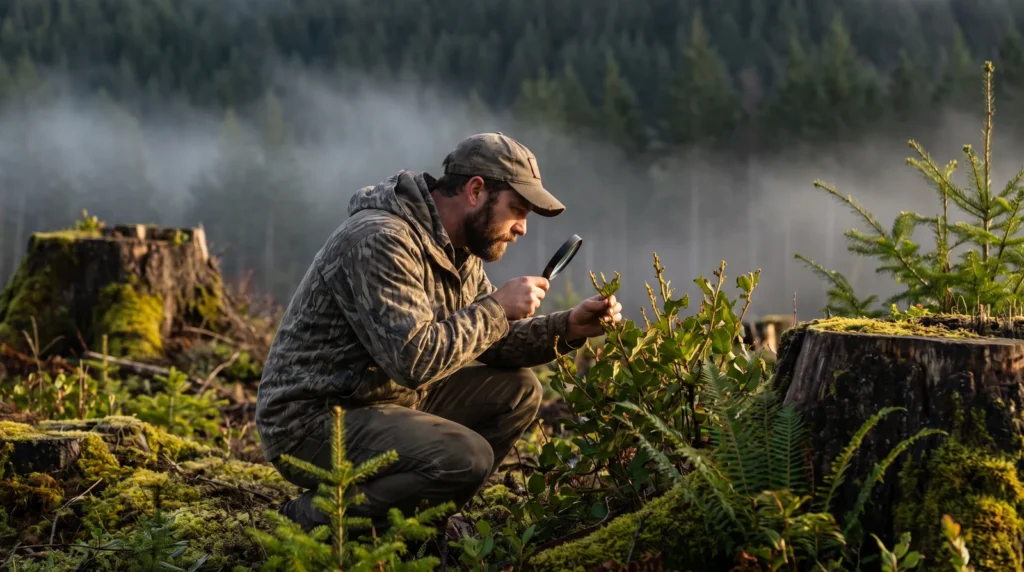
Stop scouting deer sign backwards. Learn to read stand age, seasonal browse, and feeding sign to predict where…