
Where to Trout Fish in Oregon: A Beginner's Guide
If you’re brand new to fishing in Oregon and just want to know where you can actually catch…
Articles
Eli and I hit the Siletz River just last week for our first real summer steelhead trip together. I brought the fly rod. Eli showed up with a spinning rod and a tackle box split four ways: buzz lures, worms on jigs, twitching jigs, and nymph jigs. Between the two of us, we covered almost every beginner-friendly way to chase these fish. Never targeted steelhead before? Fishing Oregon’s Coast Range? This is the guide we wish we’d had.

A steelhead is a rainbow trout that ran to the ocean and came back bigger, stronger, and a lot more particular about what it’ll eat. Resident trout hold in a river to feed. Steelhead don’t, they’re moving through on their way to spawn. That means presentation and location matter more here than for almost any other fish you’ll chase in Oregon. That’s also what makes hooking one such a rush. You’re not just catching a fish. You’re catching one that decided, for a second, to bite anyway.
Our trip was summer steelhead, not winter. That distinction matters more than most beginner guides let on. Summer steelhead enter Coast Range rivers earlier in the year and hold through the warmer months before spawning the following winter. Generally, they show up starting late spring and give you a shot through summer into early fall, depending on the river. The Siletz has a genuine, well-known summer run, exactly why we picked it. Not every Coast Range river runs summer fish the way it runs winter fish. Confirm a specific river actually has a summer program before you build a trip around it.
Winter steelhead are the more universal Coast Range run. They generally run December through March and peak in January and February. Most of the rivers in this guide are best known for that run specifically.
Whichever season you’re fishing, water conditions matter more than the calendar. In winter, that means rising and dropping “green” water after rain, still carrying a little color but clearing up from a recent high. In summer, it’s water temperature and time of day as much as clarity. Fish get sluggish and hold deeper once the water warms up through midday. Check ODFW’s current fishing regulations before you go. Seasons, bag limits, and gear rules all vary by water and by run.
The Siletz is where we did our trip. Good bank access, and one of the Coast Range’s best-known summer steelhead fisheries. For winter fish, the list opens up considerably. The Nestucca, Trask, Wilson, and Kilchis get lumped together as the Tillamook-area rivers. All four get real winter steelhead runs and see plenty of bank and drift-boat pressure. Further south, the Alsea and the Siuslaw are worth the drive. The Nehalem to the north rounds out a solid list of Coast Range systems to start learning on. Summer runs are the exception on these rivers, not the rule. Confirm with ODFW before you plan a summer trip around any river besides the Siletz.
Before you commit a whole day to one stretch, pull the river up on OnX or Google Earth. Look for access points, bridges, and public land along the bank. Same e-scouting approach we push for everything else, just pointed at a river instead of a hillside.
You don’t need to pick one method and commit for life. Between the two of us on the Siletz, we ran both, and both work.
Fly rod: A 7-weight single-hand rod with a sink-tip line covers most Coast Range steelhead water. The classic approach is swinging a fly through a run: cast across and slightly downstream, then let it swing through on a tight line. It’s a genuinely fun way to learn to read water. Indicator nymphing is the higher-percentage option when fish are tough, drift a weighted fly under a strike indicator through likely holding water.
Spinning rod: A medium 8’6″-9’6″ rod gives you the reach and backbone to control a fish in current. This is where Eli’s four-lure spread comes in:
If you’re brand new, start with a jig under a float, worm or nymph pattern. It’s the most forgiving way to present bait naturally without needing to read water perfectly on day one.

Steelhead hold in different water than salmon do, generally shallower and closer to the bank than you’d expect. This is the single most important skill in this whole guide. You can have the right gear and still go home empty if you’re fishing water that never held a fish in the first place.
Look for seams where fast and slow current meet, soft pockets tucked behind boulders, and the slower inside bends of a run. Riffle heads are classic holding water too, where fast water spills into a deeper pool. They’re oxygenated, current-broken, and just deep enough to feel safe. In higher, off-color winter water, fish push into softer, shallower water near the banks. In low, clear conditions, they retreat to deeper, slower pools. That makes them considerably harder to fool.

Summer steelhead add a layer winter fish don’t deal with: heat. Once the water warms up through the middle of the day, fish get sluggish. They drop into the deepest, coolest holes they can find, often stacking up in the same slow, shaded pools for hours at a time. Early morning and evening, when the water’s coolest and light is low, they get more active. That’s when they move into faster riffles and shallower runs to feed.
On our Siletz trip, the biggest stretch of dead water in the middle of the day matched exactly the deepest, most shaded pool on the whole run. That wasn’t a coincidence. Check the ODFW Recreation Report before you go, it gives you a read on flow and water temp so you’re not guessing at conditions when you show up. Fish the shade, fish the low light, and don’t waste your best hours on water that only holds fish at night.
Wild steelhead on most Oregon Coast Range rivers have to go back in the water. Only hatchery fish, marked by a clipped adipose fin, can be kept. Plenty of stretches are wild-fish-only regardless. Barbless hooks are required on many of these rivers too. None of this is optional. Check the regs for your specific river before you tie anything on.
Our Siletz trip was as much a gear comparison as it was a fishing trip. I worked a run with the fly rod, swinging through it twice with nothing to show for it. Eli worked the same stretch, cycling through his four jig types like he was running a tackle shop out of one small box. [stage direction: large man standing in a river questioning his life choices while his kid out-fishes him with a $12 jig] That’s the honest version of a lot of our trips together at this point. It’s exactly why we wanted to write this one from both angles, not just one.
Depends on the run. Summer steelhead show up starting late spring and fish through early fall on rivers with a summer program, like the Siletz. Winter steelhead run December through March, peaking in January and February. It’s the more common run across most Coast Range rivers.
The Siletz, Nestucca, Trask, Wilson, Kilchis, Alsea, Siuslaw, and Nehalem all get real winter steelhead runs. For summer steelhead specifically, the Siletz is the standout. Most other Coast Range rivers don’t run summer fish the way they run winter fish.
Either works. A spinning rod with a jig fished under a float is generally the most forgiving starting point for someone with zero steelhead experience.
Drifting a worm or nymph jig under a float through likely holding water. It presents bait naturally without requiring precise water-reading skills right away.
No, on most Coast Range rivers wild steelhead must be released. Only hatchery fish, identified by a clipped adipose fin, can be kept. Always check river-specific regulations first.
Seams where fast and slow current meet, soft pockets behind boulders, riffle heads, and slower inside bends. In summer they stack up in the deepest, coolest, shaded pools during the heat of the day. They move into faster water during low light.
Pick a river, watch the water conditions instead of just the calendar, and start with whichever technique matches the rod you already own. Wild fish go back. Hatchery fish are fair game. Either way, you’ll walk away better at reading water than when you started. Get out there, and we’ll see you in the next one.
More From the Blog
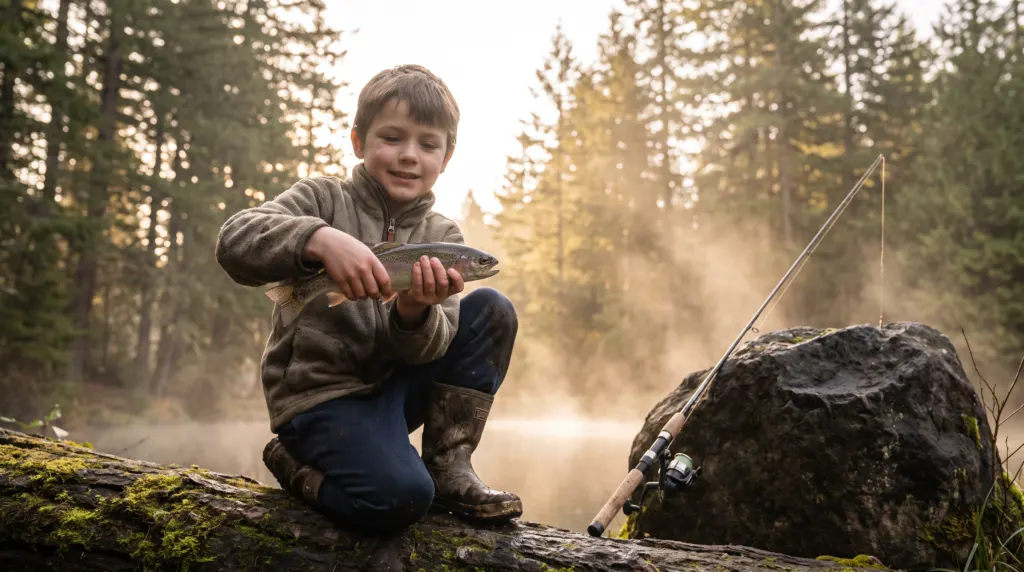
If you’re brand new to fishing in Oregon and just want to know where you can actually catch…
Willamette River bass fishing is one of the most underrated fishing opportunities in Oregon. If you Google “Oregon…
DIY elk hunting in Oregon comes down to three things. Know where elk actually hold on public land.…