River Salmon Fishing From a Boat: A First-Timer's Guide
Never targeted salmon from a boat before? Here's the exact plan we're following on our own first river…
Articles
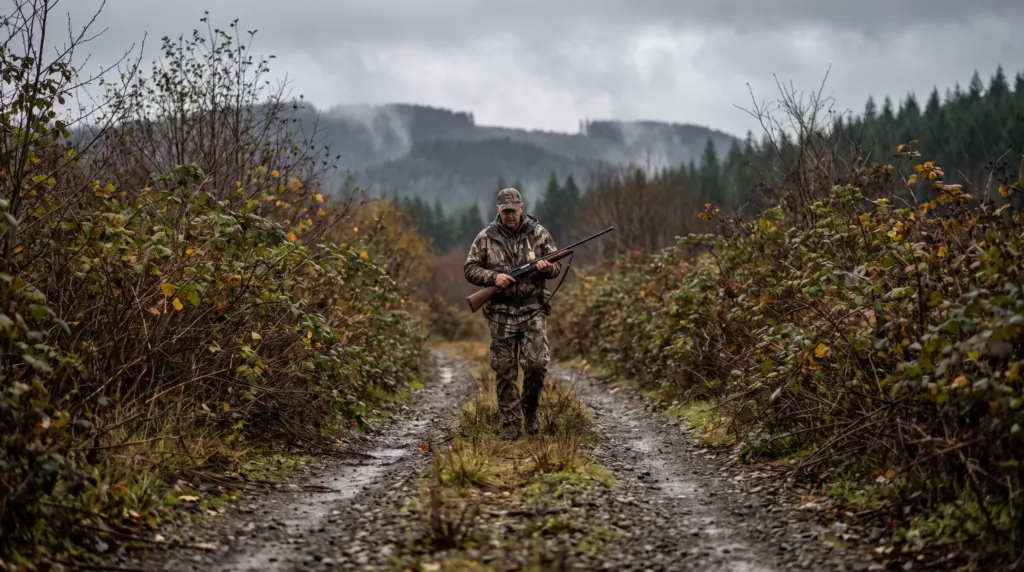
Upland bird hunting in the Oregon Coast Range means one bird more than any other: grouse. Here’s the honest version. We haven’t logged a dedicated grouse hunt on camera yet. We’ve walked past plenty of birds while scouting deer and elk. We’ve kicked a few up by accident and never once had a shotgun in hand when it happened.
This fall, that changes. Upland bird season opens September 1 in western Oregon, and we’re going in with the same terrain-reading method that’s already worked for blacktail and elk. Same ground, different target.
If you’re new to upland hunting in the Coast Range, this is the guide we wish existed before we started planning. What you’re actually hunting, where it lives, and what gear you need so you don’t waste a trip.
“Blue grouse” isn’t one bird. In Oregon, it splits into sooty grouse and dusky grouse, and they don’t share the same ground. Sooty grouse is the one that matters here. It holds the higher elevations of the Coast Range, especially ridgetops and conifer stands above 2,000 feet.
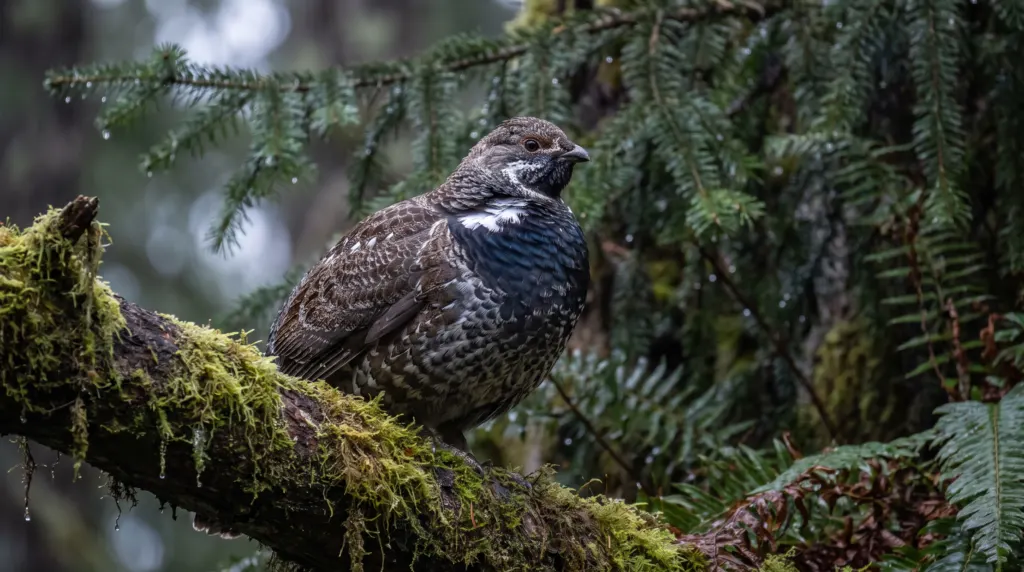
Ruffed grouse is a completely different bird in a completely different spot. It sits at mid to lower elevations, in denser, shrubby cover with berry-producing plants. Alder bottoms, riparian edges, and old logging roads with brush growing back in are ruffed grouse country.
Practically, that means your day splits in two. Grind up toward the ridgelines and ridge-top conifer for sooty grouse. Work the lower draws, creek bottoms, and brushy road edges for ruffed grouse. Same piece of ground can hold both, just at different elevations.
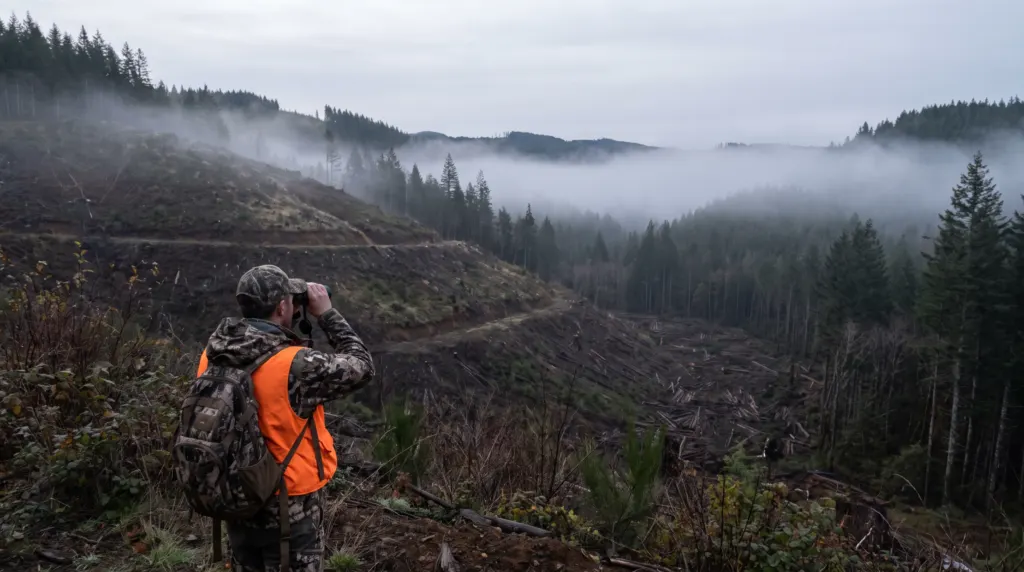
We already wrote the terrain-reading playbook for Coast Range blacktail: How to Break Down a Clearcut for Oregon Blacktail Deer. Grouse hunting uses almost the identical logic, just at a smaller scale.
Ruffed grouse are a bird of the edge, the same way blacktail are. Look where a clearcut meets standing timber. Look where brush meets a logging road, or where a wet meadow meets brush. Clearcuts that regrew over the last decade, not brand-new ones and not old-growth-adjacent ones, tend to hold the most birds. That regrowth stage is exactly the reprod stage we already look for when scouting deer.
Old logging roads are the single best grouse-finding tool in this terrain. Birds use them to dust and pick gravel. A slow walk down a brushy, lightly-used road will show you more birds than bushwhacking through the middle of a clearcut ever will.
Before you drive out, run the same e-scouting method we use for deer and elk. On the map, look for mid-decade clearcuts that are regrown, not fresh. Look for old logging roads with brush growing in on both sides. If you’re specifically after sooty grouse, look for the elevation band above 2,000 feet along ridgelines. The method doesn’t change. Only the target does.
Mountain quail live in Oregon’s brushy, steep hillsides with a healthy riparian component, and they’re genuinely part of the Coast Range ecosystem. But their real stronghold is southwest Oregon: Roseburg, Grants Pass, Medford, and points south. Check ODFW’s mountain quail page if that’s more your territory. That’s not our home ground, and we’re not going to pretend it is.
If you’re hunting the northern or central Coast Range like we are, don’t plan a trip around mountain quail. Treat any you flush as a bonus, not the target. If you’re willing to drive south, October and November are the better months for them, once seasonal movement concentrates birds lower on the hillsides.
Forest grouse season in western Oregon runs September 1 through January 31, covering both sooty and ruffed grouse. That’s a long season, and it’s easy to assume you have all the time in the world. You don’t, not for the best hunting.
Early September still has full summer foliage in a lot of Coast Range cover. Birds are there, but visibility is worse and the heat can be real. As the season moves into October and cover starts thinning out, spotting birds gets easier. If you can be flexible, mid-to-late season often beats opening week for actual visibility, even though opening week gets all the attention.
Check ODFW’s grouse hunting page before you go. Regulations, bag limits, and any in-season changes live there, not in this article.
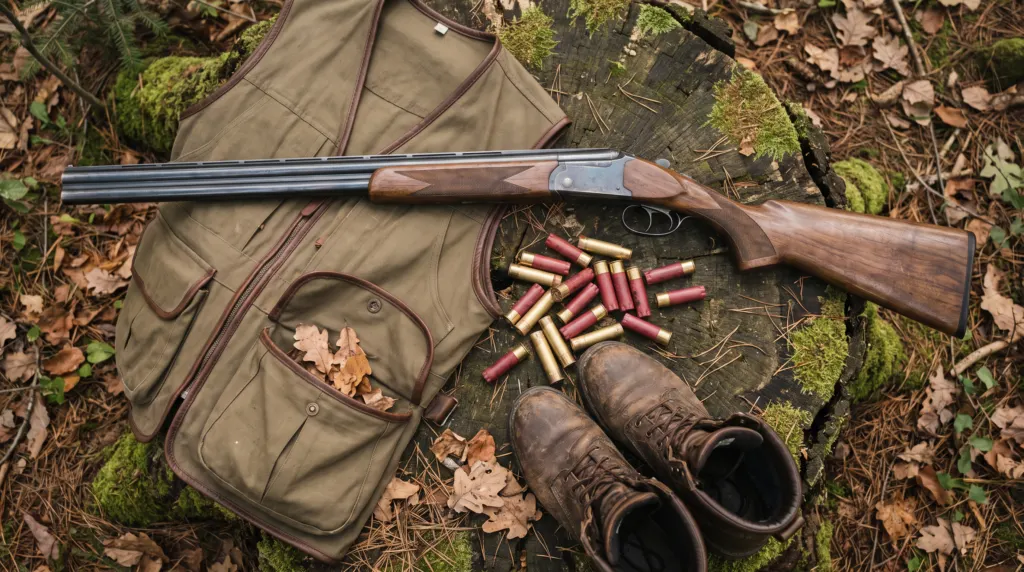
Upland hunting gear is refreshingly cheap compared to elk. You’re not packing out 200 pounds of meat. Here’s what actually matters:
Most upland hunting content assumes you’ve got a bird dog working the brush next to you. We don’t have one yet, so here’s the honest, no-dog version. Plenty of real hunters are in the same boat.
Walk old logging roads slowly, stopping often. Grouse will often hold tight in roadside brush rather than flush immediately, and a sudden stop after steady walking is what triggers a lot of flushes. Don’t walk at a constant rhythm the whole time. Vary your pace on purpose.
Work the edges, not the middle. Where brush transitions into timber, slow down and really look before you walk through. That transition zone is where birds are actually holding, not the open road surface itself.
Carry the gun ready, not slung. Flushes happen fast and close. By the time a slung gun is up, the bird is usually already committed to a flight line away from you.
Forest grouse season (sooty and ruffed) runs September 1 through January 31 in western Oregon. Check ODFW’s current regulations before you go, since bag limits and any in-season changes are published there.
Elevation and cover. Sooty grouse hold the higher Coast Range ridgelines and conifer stands above 2,000 feet. Ruffed grouse sit lower, in shrubby, berry-rich cover like alder bottoms and brushy logging roads.
No. A dog helps, but plenty of hunters work logging roads and edge cover on foot with good results. Walk slowly, vary your pace, and watch the brush transitions closely.
It’s possible but not likely. Mountain quail’s real stronghold is southwest Oregon, around Roseburg and Medford. In the northern and central Coast Range, treat any quail you flush as a bonus, not a planned target.
A 20-gauge is the sweet spot for most upland hunters. It’s light enough for a full day of walking, with plenty of power for birds this size. Pair it with an Improved Cylinder or Modified choke and #6 or #7.5 shot.
Later in the season, once fall foliage thins out, often gives better visibility than opening week, even though opening week gets the most attention. Early September still has heavy summer cover in a lot of Coast Range terrain.
We’re going into this season the same way we went into elk hunting years ago. Not much of a track record yet. But we’ve got a terrain-reading method that’s already proven itself on deer and elk. If it works on grouse the way it’s worked on everything else, we’ll have a real story to tell next time. If it doesn’t, that’s a Failed Outdoors post too.
Thanks for reading. Get outside and walk the brush edges slow. If you come home with nothing but sore legs and a few flushed birds you never got a shot at, we tip our hat to you. That’s just how we do it here at Failed Outdoors.
More From the Blog

Never targeted salmon from a boat before? Here's the exact plan we're following on our own first river…
DIY elk hunting in Oregon comes down to three things. Know where elk actually hold on public land.…
If you’re brand new to fishing in Oregon and just want to know where you can actually catch…