Willamette River Bass Fishing: The Smallmouth and Largemouth Guide Nobody Has Written Yet
Willamette River bass fishing is one of the most underrated fishing opportunities in Oregon. If you Google “Oregon…
Articles
Most of us scout for food the wrong way. We go out looking for deer, and we go out looking for plants, and both of those are lagging indicators. Sign tells you deer were here. It doesn’t tell you whether this ground holds food reliably enough to hold blacktail during the season you actually care about. The skill worth building is reading the ground so you can predict that before a single deer confirms it for you. On the Coast Range, that comes down to a handful of things you can learn to see at a glance. Here’s how I work a new piece of ground, roughly in the order I do it.
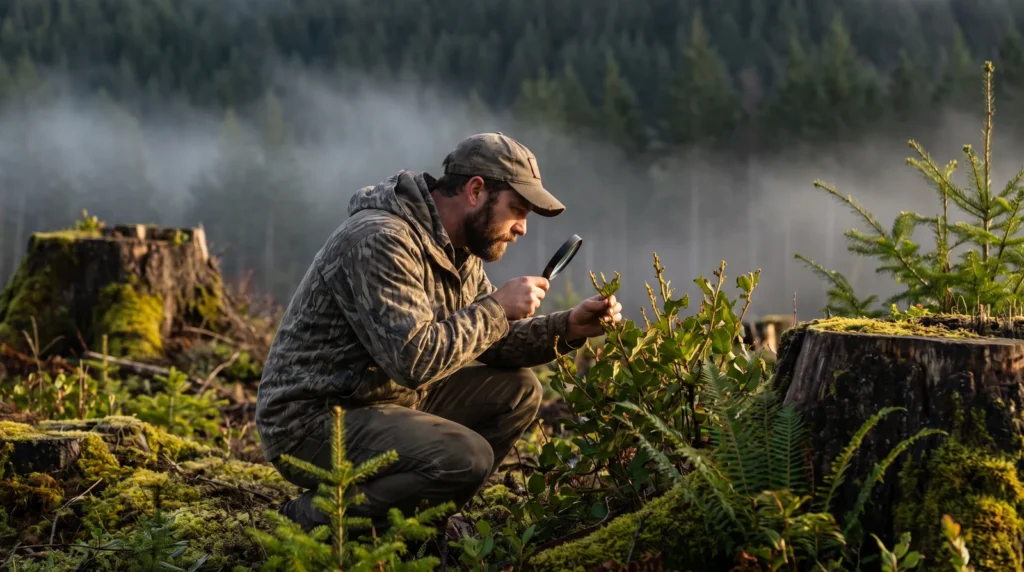
Sunlight reaching the forest floor is the whole game out here. Before you identify one shrub, look at the timber age around the spot, not the spot itself.
A clearcut in that two-to-ten-year window is a browse factory. Sun’s hitting the dirt and everything’s regenerating at once, forbs and blackberry and shrub regrowth all fighting for the same light. Once the canopy closes back up, somewhere around fifteen to twenty-five years, the ground goes dark and the food disappears with it. That’s the same forestry-stage math we use to break down a clearcut for glassing, and it’s worth knowing cold before you ever put binos up.
This is the part people miss. A mature, closed stand can be wall-to-wall salal and still be a food desert, because that salal is starved for light and barely growing. So the first question isn’t “is there food here.” It’s “is this ground even at a stage where food is possible.” Train your eye to estimate the successional stage of a hillside, the same stand-age classifications the Oregon Department of Forestry uses, and you’ve done most of the work before you’ve walked ten feet.
Honestly, you can do a chunk of this from the couch. Pull up historical imagery in OnX or Google Earth and you can date a cut within a year or two just by watching the canopy close back in across the timeline. That’s e-scouting doing the job binoculars can’t, before you’ve burned a single tank of gas driving out there to look at it in person.
You probably already know the seasonal picture. Spring is fresh green-up and buds. Summer is berries and abundance. Fall shifts to fungi, oak mast on the drier edges, and a return to woody browse. Winter runs on evergreen browse, with salal doing most of the heavy lifting.
The trap is scouting one season for another. If you’re out in July looking at a salmonberry and blackberry flush that’s absolutely hammered, remember that buffet’s gone by late October. For a fall hunt, you want to find the stuff that’ll still be producing then.
For a fall hunt, that means:
Scout the future condition of the ground, not today’s spread. This is the same reason we push doing your legwork months out in our mid-summer prep rundown instead of the week before the season opens.
A plant being there means nothing. A plant being eaten means everything.
Get in close and look at the twig tips. [stage direction: large man on his knees in the brush, wondering how he got here] This is not a dignified part of the job, but it’s the part that separates a guess from a fact. Deer have no upper front teeth, so they tear and leave a ragged, stripped tip. A clean, angled cut is a rabbit or a hare, not a deer. Ragged, blunt tips at deer height on salal, blackberry, huckleberry, and vine maple tell you this is a place they feed, not just pass through.
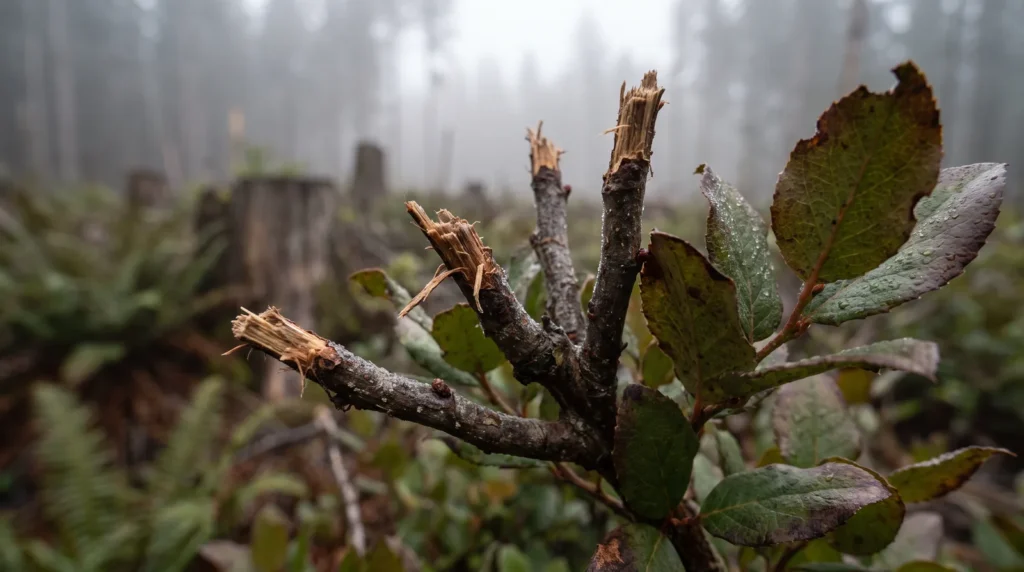
Look for hedging too, where shrubs take on a squared-off, over-pruned look because deer keep hitting the new growth. That’s a food source with a history, not a one-off.
Pellets and tracks and trails show up everywhere deer go, but the pattern differs.
Scattered, concentrated pellet groups mixed with heavy browse and beds nearby say the animals are lingering and eating. A hard-packed trail with clean tracks and no browsing says they’re moving through to somewhere else. Both are worth knowing, but only the first one answers the food question. When you find beds, browse, and pellets stacked in the same pocket, mark it. That pocket’s doing more work than the rest of the hillside combined.
Blacktail are edge animals. The most productive food is almost never in the middle of anything. It’s on the seam where a young cut meets standing timber, the riparian strip along a creek, the brushy road edge, the transition between two stand ages.
When you find a spot where several forage types stack up within a short walk, especially with cover right next to it, that’s worth a pin on the map. One food type out in the open is a snack. A diverse edge next to security cover is a place a deer can live.
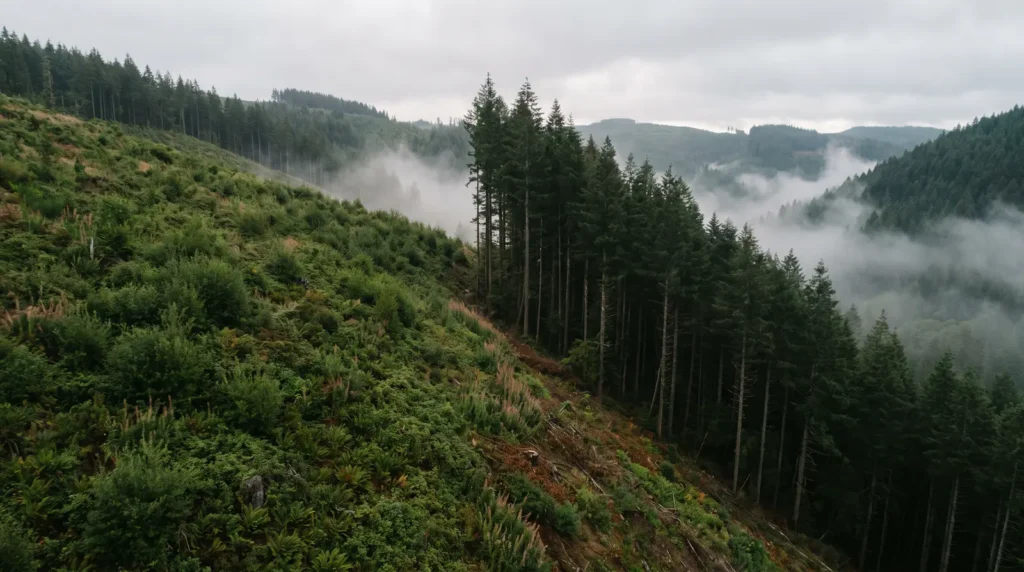
Aspect matters too: south-facing slopes warm up and green up first in spring, and they burn out first in late summer. North faces hold moisture, stay green longer into the dry stretch, and hold the damp fungal ground better in fall.
In a dry September, the north slopes and the creek bottoms are where the last green is. That’s where the deer will be, even if the south faces were loaded earlier in the year.
Two things separate finding sign from actually understanding a piece of country.
Food only concentrates deer when it’s scarce everywhere else. In summer, food isn’t the limiting factor on the Coast Range. It’s everywhere, so deer are spread out, and a great feeding area doesn’t mean much. The reason fall and winter forage matters so much is that everything else has died back and the remaining food pulls animals in. So when you find a rich summer spot, don’t assume it holds deer in October. Ask instead what this specific piece of ground offers when the surrounding country goes lean. The best fall and winter spots are often unremarkable in July.
A single scouting trip is a snapshot, and food is a moving target. The more useful mental model isn’t “does this area hold food,” it’s “what’s the trajectory of this ground.” A cut that’s thin now will be prime in three years. A prime cut is two years from closing up and going dead. Scout the same units across seasons and across years and you stop reacting to what deer already did. You start predicting where the food, and the deer, are about to be.
That shift is the whole thing. Sign tells you where deer were. Stand age and season tell you where they will be.
Found a salmonberry patch a couple summers back that was an absolute grocery store, hammered browse everywhere, deer beds tucked right against it. Got excited, marked it, told myself I’d found the spot. Walked back in during the October opener expecting the same buffet and found a wall of dead, brown stems and not a single fresh track. The food was gone, and so were the deer, because I’d scouted July’s ground and hunted it in October like nothing changes in three months. Should’ve, would’ve, could’ve. Lesson stuck, though: now every spot gets asked what it looks like in the season I’m actually going to be sitting there, not the season I happened to be scouting it in.
Roughly two to ten years old. That’s the window where the canopy is open enough for forbs, blackberry, and shrub regrowth to flourish. Past fifteen to twenty-five years, the canopy closes and the ground goes dark again.
Look at the twig tip. Deer have no upper front teeth, so they leave a ragged, torn tip. Rabbits and hares leave a clean, angled cut. Ragged tips at deer height are your confirmation.
Mostly evergreen browse, with salal and evergreen huckleberry doing the heavy lifting once everything else has died back or dropped, consistent with the winter habitat use ODFW documents for Coast Range blacktail.
Not necessarily. Food isn’t limiting in summer, so it doesn’t concentrate deer the way scarce fall and winter forage does. Judge a spot by what it offers when the surrounding country goes lean, not by how loaded it looks in July.
Yes, to a point. Historical imagery in OnX or Google Earth lets you date a cut and track canopy closure over time before you ever drive out. It narrows down where to spend boots-on-the-ground time, but it doesn’t replace checking twig tips in person.
North-facing slopes and creek bottoms. They hold moisture longer and stay green after south-facing ground has burned out.
None of this replaces time on the ground, it just tells you where to spend that time instead of wandering wherever looks green from the truck window. Learn to read stand age, match food to the season you’re actually hunting, and confirm with twig tips instead of assumptions. Do that enough seasons in a row and you’ll stop finding sign and start predicting it. Get out there, put in the miles, and we’ll see you in the next one. And if the buffet’s closed by the time you get there, well, that’s just Failed Outdoors doing what Failed Outdoors does.
More From the Blog
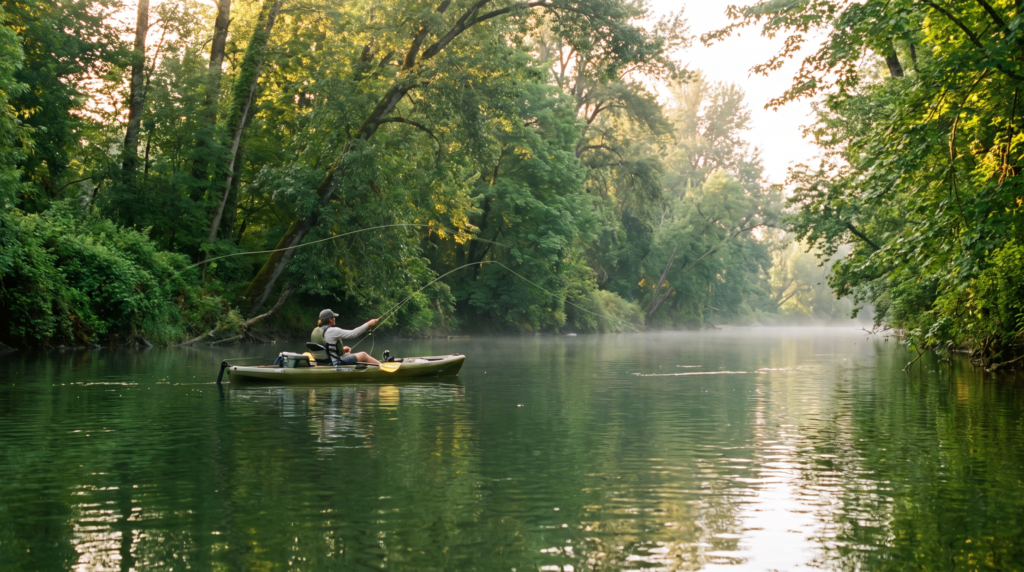
Willamette River bass fishing is one of the most underrated fishing opportunities in Oregon. If you Google “Oregon…
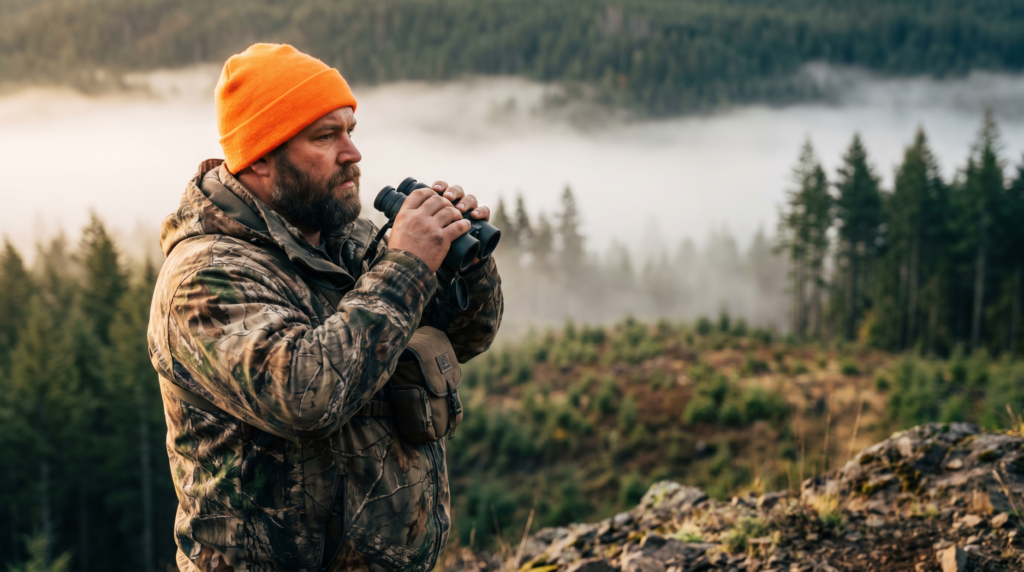
E-scouting for hunters and anglers is the skill most people skip and then wonder why they keep coming…
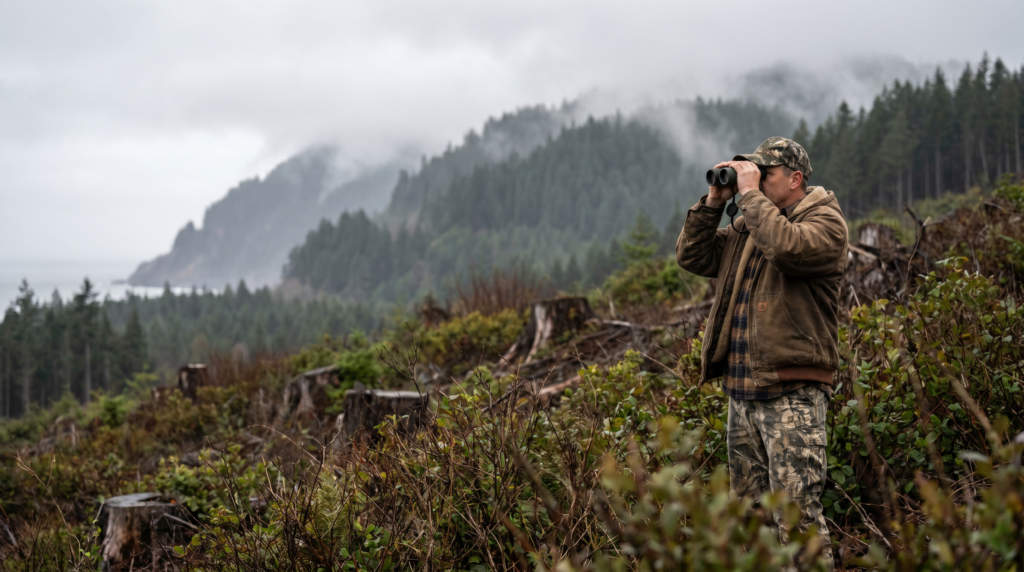
Find Columbia blacktail deer in Oregon's coast range clearcuts and Cascade foothills. E-scouting tips, gear advice, and real…