
Willamette River Bass Fishing: The Smallmouth and Largemouth Guide Nobody Has Written Yet
Willamette River bass fishing is one of the most underrated fishing opportunities in Oregon. If you Google “Oregon…
Articles
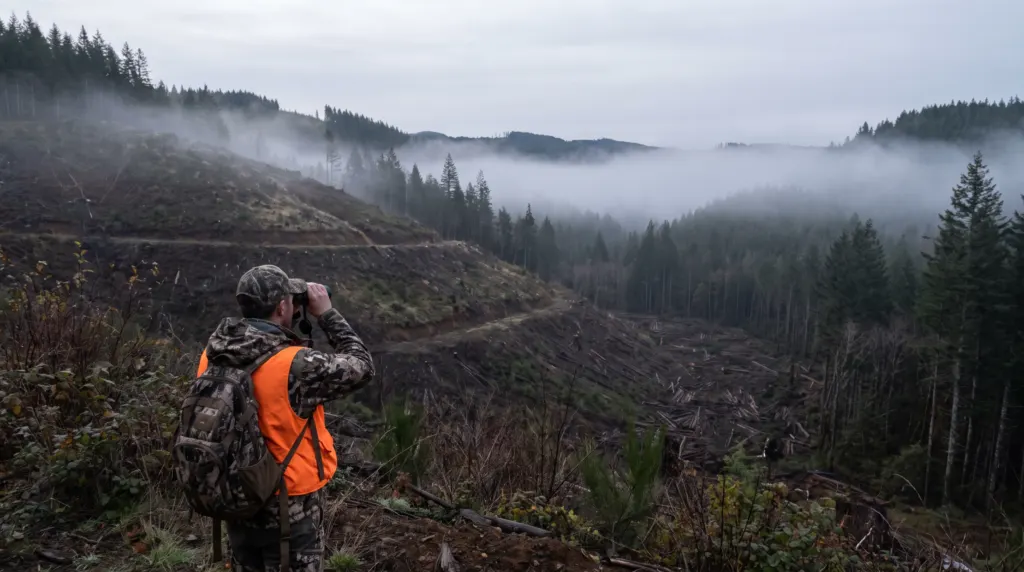
DIY elk hunting in Oregon comes down to three things. Know where elk actually hold on public land. Get to them without blowing your cover. Bring the gear for country that punishes the wrong choices.
Every year we say the same thing before elk season: this is the year. And every year, elk hunting kicks our tails in a way that blacktail never does. Deer we’ve gotten decent at. Elk still humble us. We’ve called five bulls into range in one afternoon and still come home with tags in our pockets. We’ve also watched another hunter walk out with a bull we spent two years patterning.
That’s actually the point of this article. Not a highlight reel. This is an honest, DIY breakdown of where elk actually are on Oregon public land. It covers how to get to them without giving away your position, and the gear that’s mattered versus the gear that’s just weight in your pack.
If you want a guide written by someone who’s tagged out on elk five years running, this isn’t it. If you want the real terrain logic, the mistakes that cost us animals, and a method you can actually go run this fall, keep reading.
Here’s the first thing nobody tells beginners: “elk hunting in Oregon” isn’t one hunt. The Coast Range and Eastern Oregon are close to opposite strategies, and treating them the same is how people burn a week of vacation and see nothing.
Coast Range elk means thick timber, clearcuts, reprod, and short visibility. You’re not glassing a herd from two miles away. You’re finding sign, closing distance in cover, and calling into brush where you might see a bull at 20 yards or not at all. When you do spook a herd here, they don’t panic and scatter single file the way they do in open country. They bunch up tight and crash out together, which actually tells you something. If you bump one, you probably just bumped the whole group.
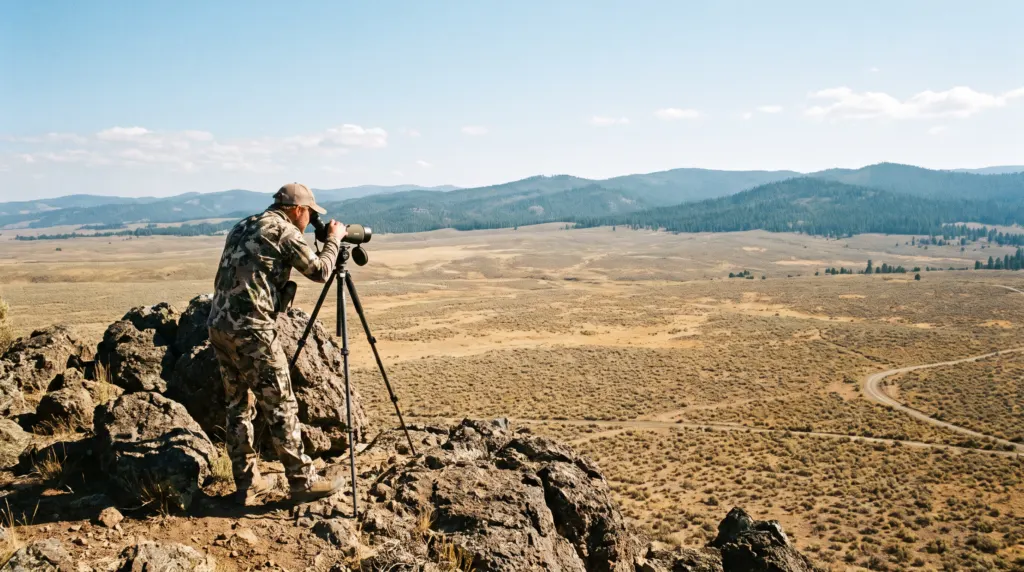
Eastern Oregon elk is a different animal, literally and logistically. Open country, long glassing sessions, and a controlled-hunt draw system that means you often need points before you can even hunt a given unit. It’s also a lot quieter out there in a way that surprises people from the west side. Sound and movement carry for miles in dry, open country. Drive a road you don’t need to, and elk a mile off will know you’re there before you know they exist.
Most of western Oregon’s general-season elk hunting (Coast Range, Cascade foothills) is still over-the-counter, especially for archery. No draw required. Buy a tag and go.
Eastern Oregon is increasingly the opposite. More units, including several archery-only units, have shifted to controlled-hunt draws that require preference points before you can even hunt them. That trend keeps expanding year to year. Applications are due by May 15, months before most people start thinking about elk season. If a specific Eastern Oregon unit is the plan, that’s not a decision you get to make in August.
Check current tag requirements and deadlines on ODFW’s big game hunting seasons page. Regulations and unit boundaries shift every year, and we’re not going to pretend a blog post is a substitute for the current regs.
Elk are lazy in the most useful way possible. They want food, water, and cover within a short walk of each other. They also want to bed somewhere they can smell trouble coming from every direction. Once you’re looking for that combination instead of just “the woods,” everything changes.
The bench-to-bowl setup. This is the single most reliable structure we’ve found in Coast Range clearcuts. A hillside that benches once, benches again, then drops into a timbered bowl at the bottom is elk gold. The benches give them staging and feeding ground on the way up or down.
The bowl at the bottom is the key. When a clearcut face funnels down into trees that curve into a bowl shape, thermals swirl inside it. That pools scent in the bowl instead of carrying it straight out. Elk bed in exactly that kind of pocket because it’s nearly impossible for anything to sneak up on them from a single direction. If you find a clearcut with two benches and a timbered bowl underneath, mark it. That’s a spot to come back to, not a spot to walk through once.
Marshy draws feeding uphill. In Eastern Oregon, watch for a draw that comes out of a marshy or wet bottom and runs up the side of a ridge. We’ve watched entire herds move up one of these on their way to bed for the day. Wet ground at the bottom means food and often easier travel; the draw itself is a natural travel corridor elk use over and over.
Big flats you can glass all day. Sometimes the plan isn’t clever terrain reading. It’s just finding one flat with good sign and sitting on glass long enough to catch elk crossing it. This is boring advice and it works. We’ve had our best Eastern Oregon luck doing exactly this: pick a flat with sign, set up where you have a wide view, and give it hours, not minutes.
The edge, not the middle. Clearcut-to-timber transitions, farm-field-to-timber edges, reprod-to-mature-timber lines. Elk live on edges the same way deer do, just at a bigger scale. If you’re glassing the dead center of a huge opening and seeing nothing, move your eyes to where that opening meets cover.
Read the pressure map, not just the terrain map. By the time general rifle elk season opens in a lot of western units, deer season has already pushed elk around for weeks. Elk that summered in the timber often get shoved toward private farm fields at lower elevation once enough boots have been through the hills. This isn’t defeatist. It’s useful. If the timber’s dead quiet late in the season, the farm-field edges bordering that timber are worth a hard look, from legal public vantage points.
We built our whole hunting strategy (deer, elk, doesn’t matter) around e-scouting with OnX Maps and Google Earth before boots ever hit dirt. We wrote the full method here: E-Scouting for Hunters and Anglers: The Complete OnX and Google Earth Guide. For elk specifically, here’s what to actually look for on the map before you go:
Getting close to elk is less about fitness and more about not announcing yourself. If you haven’t already, get familiar with the access rules for the ground you’re hunting. We cover the real frustrations and fine print in Travel Management Rules – The Good, the Bad & What You Need to Know. A few things that have actually mattered once you’re legally where you need to be:
We’re going to tell you about a mistake instead of a win, because it’s the more useful story. We’d patterned a herd for weeks on a piece of ground and had them dialed to specific evenings. We walked in on opening morning with a plan.
Problem was, the wind was blowing gently uphill as things warmed up. Thermals pulled our scent straight ahead of us into the exact draw the herd was using. We smelled elk on the wind ourselves, twice, on the way in. That’s never a good sign. It usually means you already smelled them first and they’re already moving off. Turned out later that someone else killed a bull out of that same group two ridges over. We’d pushed our own herd into somebody else’s lap.
Here’s the mechanism, since knowing why makes it easier to plan around. Pre-dawn and early morning, before the sun’s warmed the slopes, cool air is still sinking downhill. That pattern is steady and predictable. Once the sun starts warming the terrain, that flips: rising air starts carrying scent upward, usually stabilizing by mid-to-late morning. Evenings reverse it again as the ground cools and air sinks back downhill.
The general rule elk guides use: approach from above in the morning, from below in the evening. Mature bulls know this as well as any guide does. They specifically bed where thermals swirl, so they can see danger coming from in front and smell it coming from behind. That’s exactly the bench-and-bowl bedding pattern we described above. It’s not a coincidence. It’s the same mechanism.
The takeaway: plan your approach around which way the thermal is actually running that hour, not a blanket “morning versus evening” rule you memorized once. Check the wind constantly, not once at the trailhead. One bad wind swirl can move an entire herd off a piece of ground for days.
Here’s something we’ve noticed ourselves and wanted to check against what everyone else is seeing. Elk seem quieter than they used to, especially on public ground, especially the further you get into archery season. Turns out that’s not us imagining it. It’s a well-documented pressure effect, worth understanding before you build a whole hunt plan around bugling a bull in.
Public land elk pressure has climbed hard over the last decade. More hunters, going deeper, going earlier, better equipped than ever. A lot of them learned to call from the same handful of YouTube channels and podcasts. Elk are smart enough to learn the pattern.
A bull that gets called in, then winds a hunter or has a bad experience, gets measurably more cautious about the next bugle he hears. He’s learned to associate the sound with danger. On heavily pressured public ground, the pattern is consistent: bulls respond well early in the season, and by the second or third week, a meaningful share have gone call-shy. Some will now move away from elk sounds they don’t fully trust instead of investigating them.
That doesn’t mean calling is dead. It means the plan needs a season-long adjustment, not a one-size-fits-all bugle sequence:
In practice, the version that’s worked for us on ground that isn’t burned out yet is straightforward. Bugle to locate and challenge. Use cow calls to reassure and draw them the rest of the way in. Bring more than one caller if you can manage it.
We had one afternoon where a bugle off a ridge point turned into five different bulls answering and working toward us at once. Two locked onto the bugle. One worked in from the side answering a cow call. It built from there once other bulls in the area started hearing multiple bulls “compete” for attention. It doesn’t always end in a shot (that day didn’t). But it tells you the tactic works when elk are talking.
A few things that mattered in that stretch, plus what elk-calling guides consistently teach beyond what we figured out ourselves:
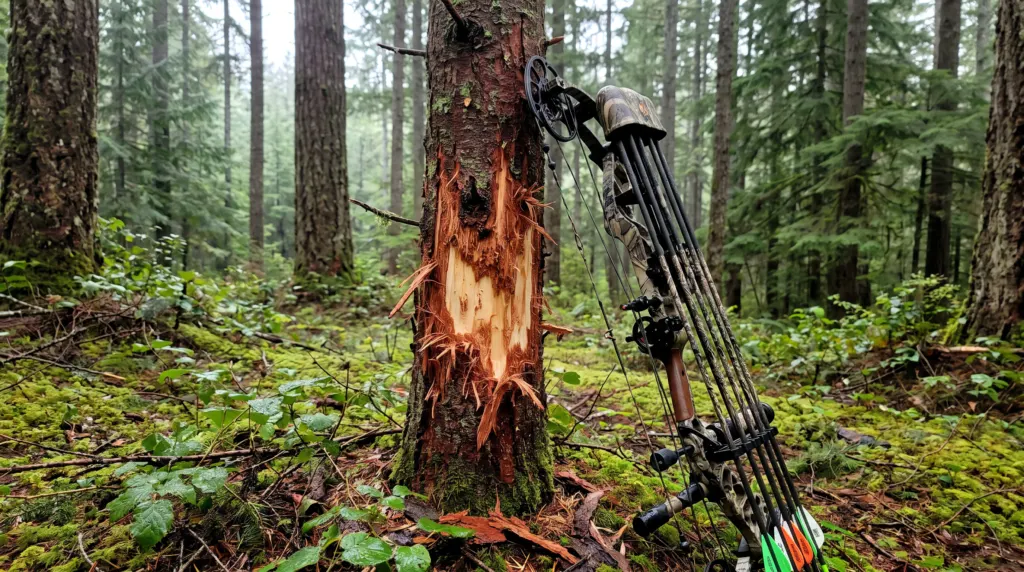
Not every acre of good-looking timber holds elk. They roam, they migrate, and a piece of ground that was loaded with elk two years ago can be empty this year if the food, water, or pressure has changed. So instead of hunting a location, hunt the sign that proves elk are actually using that location right now. Scouting boils down to finding three things and the routes connecting them: where they bed, where they feed and water, and the trail between the two. Find sign clusters for all three close together and you’ve found a real pattern, not a guess.
Rifle season in a lot of Oregon units falls after the rut has wound down, which changes the whole game. Bulls stop bugling, stop chasing cows, and pull back into the thickest secure cover nearby to recover and pack on fat before winter. Calling loses most of its pull at this point. Glassing becomes the tool that actually finds elk.
Post-rut bulls don’t roam far. This is the single most useful thing to know for rifle season: a recovering bull often beds within a couple hundred yards of his primary feeding area. He’s not covering country. He’s running a tight loop between bed, water, and the nearest good feed, because conserving energy matters more now than it did during the rut. Find that loop and you’ve found him, likely for days at a stretch.
Bachelor groups reform and get predictable. After the rut, bulls that spent weeks fighting and chasing cows regroup into loose bachelor bands of a few animals. Once they’ve had time to rest, these groups actually get easier to pattern than rutting bulls were. They feed longer in the mornings, show up earlier in the evenings, and stick to defined routes between bedding and food.
Glass like you mean it. Be in position glassing before first light and stay on glass after last light. That’s when post-rut elk move on their feet. The rest of the day, they’re bedded and invisible. Focus your glass on edges (clearcut-to-timber, reprod-to-mature-timber) rather than the open middle of a unit. Treat every scan as if there’s an elk already in the frame you just haven’t picked out yet, not as a quick look before moving on.
Know why a spot went quiet. Elk aren’t static, and “no elk here anymore” usually has a reason. Snow is the biggest trigger for real elevation migration, pushing herds down to lower ground, south-facing slopes, and drainages as it piles up. In a mild year with little snow, elk can sit high much longer than hunters expect. Either way, elk tend to reuse the same migration routes and wintering ground year after year. A pattern you confirm this season is worth scouting again next season, not just this one.
Elk gear questions always turn into rifle and optics arguments. Those matter, but they’re not where most DIY elk hunts actually fall apart. Here’s what’s mattered for us, roughly in the order it’s bitten us when we didn’t have it:
None of this requires top-shelf brand names to start. Spend where it actually changes outcomes (rangefinder, boots, pack, optics) and don’t feel pressured into premium everything just to go try this.
This next part isn’t the fun stuff, and we’re not going to make it fun. Elk absorb hits that would drop a deer instantly, and that changes your obligations after the shot.
Know the anatomy before you’re standing over an animal deciding what you saw, not after. On a broadside elk, the vitals sit lower than most people instinctively aim. Follow the back of the front leg up about a third to half the depth of the chest. That’s the top of the heart and the center of both lungs.
A quartering-away angle is often the better shot than broadside, not a compromise. It exposes more of the vital cavity and lets the bullet or arrow travel through more of the animal instead of catching shoulder bone. Frontal shots and anything at the head or neck are a small, heavily-protected target on a moving animal. Skip them.
There’s also a spot further back where the rear of the lung, top of the liver, and front of the stomach all sit close together. Hit that convergence and you can catch more than one vital organ. Clip just one, and you’ll end up with a much longer recovery than a hit a few inches forward would have given you. A hit that looks solid and sounds solid doesn’t guarantee a short track job on an animal this size.
If you hit an elk and it doesn’t go down in sight, give it real time before you push. Let the hit dictate how long. A well-placed heart or double-lung shot generally goes down within 30-45 minutes if left alone. Anything you’re unsure of, or an elk that ran off looking otherwise fine, deserves 1-2 hours. A liver hit needs 2-3 hours. A gut shot needs 6-12 hours before you follow up.
Pushing a bumped, wounded elk before it’s had time to bed down and stiffen up is how a recoverable animal turns into a lost one. It can run far harder and farther than a deer will on the same adrenaline. Follow blood carefully. Grid the area methodically if you lose the trail, and don’t assume you’re done just because you’ve gridded once. Ask for help if you have people who can give it. This is the one place in hunting where pride costs you the most. A lost animal because you were too proud to call for extra hands is a worse outcome than the mildly awkward text asking for help.
If you do everything right and still lose the animal, that’s part of hunting hard game on public land, not a reflection of your skill. It happens to people who’ve done this for years. What matters is that you gave it a genuine, patient effort before you walked away. For a deeper anatomy breakdown than we can cover here, the Rocky Mountain Elk Foundation publishes detailed shot-placement guides worth studying before season, not during it.
One more piece of strategy that’s easy to miss as a beginner. Elk seasons in a lot of western Oregon units come after deer season has already been running for weeks. That pressure doesn’t disappear when deer season ends. It’s already reshaped where the elk are. Herds that summered in the high timber often get pushed toward lower elevation and private ag ground by the time later rifle elk seasons open.
That’s not a reason to give up on public land. It’s a reason to scout right up against the edge of that pressure: the timber-to-farm-field boundary, the last piece of cover before open ground. Don’t assume the elk are still exactly where you glassed them up in August. Plans that worked in preseason scouting sometimes need a real rewrite once a few weeks of hunting pressure have moved the herd.
Everything above is strategy. This part is the practical stuff that doesn’t fit neatly into a strategy section but will absolutely affect your season if you skip it.
Actual season dates. Oregon’s 2026 archery elk season runs roughly August 29 through September 27. Rifle seasons split by zone. East-side Rocky Mountain elk generally run two seasons in the November 7-15 window. Roosevelt elk on the west side run November 14-17, with a second season November 21-27. These shift slightly by unit and year, so treat them as planning ballparks, not gospel. Confirm exact dates for your unit on ODFW’s seasons page before you build a trip around them.
Know your tag’s antler restriction before you glass a single bull. A lot of Oregon units are spike-only, meaning legal means a bull with at least one unbranched antler. Brow tines don’t count as a branch. Other units require a branch-antlered bull. This isn’t a detail to sort out through the scope. Know exactly what your tag allows before you’re standing over an animal deciding whether you can shoot it.
Electronic calls are illegal for elk in Oregon. If you’ve picked up calling habits from content out of a state with different rules, note this now: manual calls only, no electronic callers, for elk here. Get familiar with your call by hand.
Fire season overlaps archery season, and it can shut down your unit with little warning. Late August into September is peak Oregon wildfire season. ODFW doesn’t cancel hunts for fire, but the actual land managers (ODF, Forest Service, BLM) absolutely close access when there’s an active fire or high danger nearby, sometimes fast. Check current closures before you drive out, not just before you apply.
Trail cameras are legal here, standard SD-card ones anyway. Oregon bans hunting or scouting with night-vision or infrared sighting equipment, but traditional trail cameras are specifically exempted from that rule. Run cameras as part of your e-scouting plan with confidence, just don’t lean on night-vision optics to locate animals.
Meat care doesn’t stop at recovery. We covered getting to a downed elk, but not what happens in the next hour. In warm early-season weather, that hour matters. Skin and quarter as soon as you can. Don’t count on ice in the body cavity to cool an animal this size. Split the hind leg at the ball joint if it’s hot out, so heat can actually escape instead of cooking the meat from the inside. Bag it, get it in shade and moving air, then into a cooler, as fast as the terrain allows.
Your body is gear too. Every strategy in this article assumes you can actually cover the ground, ten-plus miles a day, repeatedly, with a pack. If your prep stopped at buying a rifle and a rangefinder, that’s the gap that ends most DIY elk trips early. Start walking hills with a weighted pack before season, not during it.
Bring a way to call for help that doesn’t need a cell tower. A lot of the ground this article is talking about, BLM, Coast Range timber, backcountry Eastern Oregon, has zero cell service. A satellite communicator is cheap insurance against a bad fall, a lost partner, or a real emergency miles from the truck.
It depends on the unit and weapon type. Much of western Oregon’s Coast Range and Cascade elk hunting is still over-the-counter general season, especially for archery. Eastern Oregon has been shifting more units, including some archery units, to controlled-hunt draws that require applying by May 15. Check current tag types and deadlines on ODFW’s big game seasons page before you plan a season around a specific unit.
Visibility and hunting style. Coast Range hunting is close-range, thick-timber work built around sign, calling, and terrain funnels like bench-and-bowl clearcuts. Eastern Oregon is long-range glassing in open country, where sound and movement carry much farther and the animals are more sensitive to vehicle noise.
Further than for deer, generally. Multi-day trips in the ten-plus-mile-a-day range are common, especially in Eastern Oregon or when you’re following sign into ground other hunters haven’t bothered reaching.
Most states set a practical floor around .270 or .30 caliber. The commonly cited energy benchmark is at least 1,500 ft-lbs at impact (2,000 is better) from a bullet built for deep, controlled penetration.
.270 Winchester, .30-06, and .300 Win Mag are the most common choices for exactly that reason. The number on paper matters less than your ability to shoot accurately at your realistic hunting distance. Shot placement beats magnum size every time.
Yes, and it doesn’t require expensive gear to start. A basic bugle tube and diaphragm call, used with patience, is enough to start. Bring a partner who’s watching instead of just calling. It’s produced real action for us, even on days that didn’t end in a harvest.
Yes, especially on pressured public land later in archery season. Elk learn to associate calling with danger after a bad encounter, and reported patterns show meaningfully more call-shy behavior by the second or third week of the season. The adjustment: call with confidence early, go softer and less frequent as the season wears on, and be ready to hunt silent (spot-and-stalk) once a herd stops responding.
Glassing, not calling. Post-rut bulls go mostly quiet and often bed within a couple hundred yards of their main feed, running a tight bed-water-feed loop instead of roaming. Be on glass before first light and after last light. Focus on edges rather than open middles, and look for fresh sign (trails, rubs, wallows) that confirms elk are actually using that ground right now.
Let the hit dictate your wait. Clean heart or lung hit: 30-45 minutes. Unsure of placement: 1-2 hours. Liver hit: 2-3 hours. Gut shot: 6-12 hours. Elk can absorb hits that would drop smaller game and travel much farther if pushed too early. Don’t assume a solid-sounding hit means a short recovery. Track carefully and methodically, and get help if you can.
Elk hunting will humble you before it rewards you, and that’s honestly part of why we keep going back. You will do everything right on paper (the e-scouting, the wind check, the early alarm clock) and still come home with an empty tag more often than not. That’s not a reason to skip it. Read the terrain, respect the wind, bring the right gear for the miles and the meat, and go put in the time on public land this fall.
Once elk season wraps up, don’t just put the gear away. Winter is fishing season around here: read Willamette River Bass Fishing or Where to Trout Fish in Oregon to keep the season going.
Thanks for reading. Get outside, check your wind before you check your phone, and if you come home with nothing but sore legs and a good story, we tip our hat to you. That’s just how we do it here at Failed Outdoors.
More From the Blog
Willamette River bass fishing is one of the most underrated fishing opportunities in Oregon. If you Google “Oregon…

Never targeted salmon from a boat before? Here's the exact plan we're following on our own first river…

Archery season opens August 29. Here's what peer-reviewed research and Oregon's own Starkey Project actually show about temperature,…